What is USD stablecoin? Types, Principles and Choices Guide for Taiwanese Investors to Read
preamble
In the cryptocurrency market,What is the US dollar stablecoin? Simply put, it is a cryptocurrency designed to maintain a 1:1 value link to the dollar and has become an indispensable infrastructure for the crypto world. Whether it's hedging traders, paying across borders, or engaging in decentralized finance, the USD stablecoin plays a key role. Currently, the global dollar stablecoin has exceeded $2,500 billion, with USDT and USDC accounting for more than 8% of the market share. For Taiwanese investors, understanding the mechanisms, risk characteristics, and applicable scenarios of different USD stablecoins is an important first step in safely participating in the cryptocurrency market.
The definition and operation of the US dollar stablecoin
What is USD stablecoin?
US dollar stablecoinA cryptocurrency that is tied to the value of the dollar, the goal is to maintain the stability of one dollar for each token through various mechanisms. It combines the convenience of blockchain technology with the stability of the dollar and is considered the “digital dollar” in the cryptocurrency ecosystem.
How does the USD stablecoin keep its value stable?
At the heart of price stability is the “two-way exchange mechanism”. We can understand this with a simple analogy: just like the currency market in Taiwan, when the NTD exchange rate deviates from the central bank's target, the central bank makes adjustments. Issuers of stablecoins also play a similar role:
- When the stablecoin market price is above $1: The suitor buys a new stablecoin from the issuer with $1 and then sells it on the market at a higher price, earning a spread. This process increased market supply, pushing prices back down to $1.
- When the market price is below $1: The evaders buy stablecoins at a low price in the market and exchange it back $1 to the issuer, earning the spread. This process reduces market supply, pushing the price back up to $1.
Differences between US dollar stablecoins and traditional bank deposits
Although both represent the value of the dollar, the two are fundamentally different:
- Different legal protection: Banks with traditional US dollar deposits in Taiwan may have the relevant protection, butUSD stablecoin is a privately issued digital asset, is not directly covered by deposit insurance.
- Operating system is different: Stable coins run on a blockchain instead of in a banking system, holding stablecoins is not equivalent to holding dollar deposits in banks.
- Convenience DifferencesStabilizer coins offer unattainable advantages of traditional US dollars, such as 24/7 transfers, fast and low-cost cross-border payments, and integration with smart contracts.
Top 3 Reasons Why the Dollar Stabilizes the Market
1. The international currency status of the US dollar
The US dollar is the world's most important reserve currency, with more than eight per cent of the US dollar used in international trade settlement. This dominance extends to the digital realm, where a version of the anchored dollar is naturally preferred when the market needs stablecoins.
2. Pricing habits in the cryptocurrency market
The vast majority of cryptocurrency exchanges use the USD or USD stablecoin as a unit of pricing. Bitcoin, Ethereum prices are often quoted in USD, making the USD stablecoin the “benchmark currency” of the cryptocurrency market.
3. Actual requirements for cross-border payments
Global cross-border remittances and international trade are conducted primarily in US dollars. With USDT or USDC for cross-border payments, both parties can settle in familiar U.S. dollars without the hassle of dealing with complex multi-currency conversion issues.
Full Inventory Analysis of Mainstream US Dollar Stable Coins
USDT (Tether): The largest dollar stablecoin by market capitalization
Issued by Tether, USDT is the largest U.S. stablecoin by market capitalization at more than $1,400 billion.
typified:
- Using the “fiat collateralization model”, Tether claims to hold a corresponding dollar reserve for every USDT in circulation
- Issued on more than a dozen blockchains such as Ethereum, Tron, Solana
- Best liquidity listed on over 500 cryptocurrency exchanges
considerations: A Tether company registered in the BVI uses a predominantly offshore structure with relatively low regulatory compliance, and investors should pay attention to the transparency of their reserves.
USDC (USD Coin): The most compliant US dollar stablecoin
USDC was issued by US company Circle in partnership with Coinbase and has a current market capitalization of around $400 billion.
typified:
- Regulated by the New York State Financial Services Authority and holds a currency transfer license
- Monthly publication of audit reports by renowned accounting firms
- Reserves mainly in cash and short-term U.S. Treasury securities, with high asset quality
DAI: The Most Decentralized Dollar Stable Coin
DAI is issued by MakerDAO protocol and is the largest decentralized dollar stablecoin with a market capitalization of approximately US$50 billion.
typified:
- Fully managed by smart contracts, no reliance on centralized companies
- Use “excess collateral” such as depositing $150 worth of Ethereum to lend $100 DAI
- NO SINGLE ENTITY CAN FREEZE ACCOUNTS, STRONG ANTI-CENSORSHIP
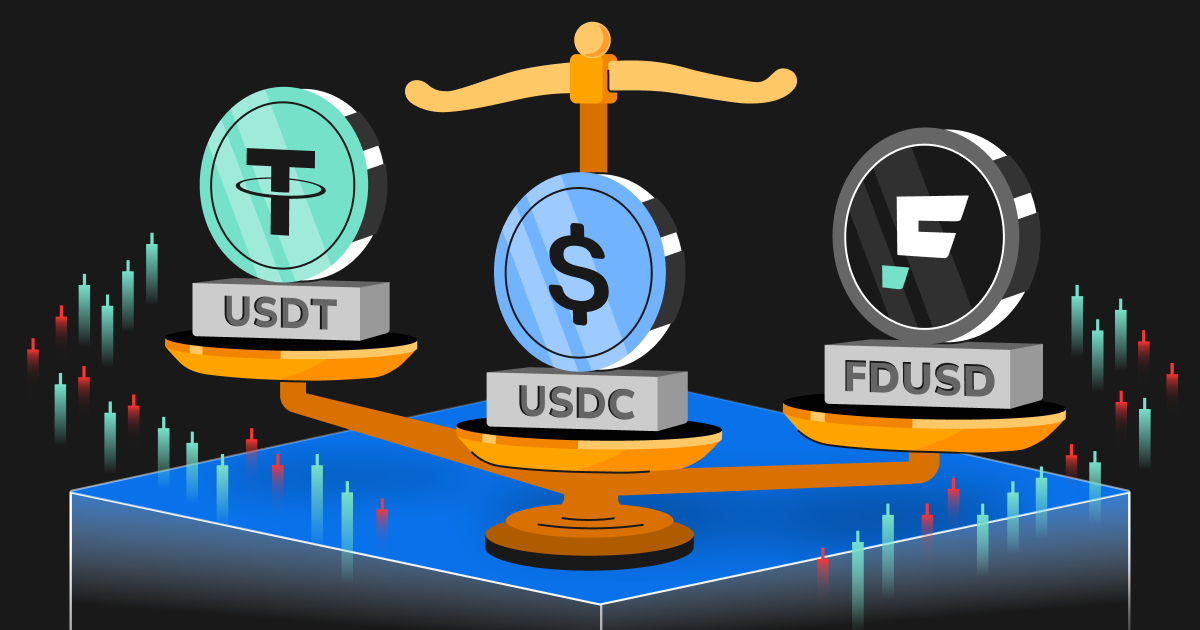
USDT, USDC, DAI three stablecoin depth comparison
Reserve Transparency Comparison
- USDT: Provides quarterly attestation reports, transparency is relatively low among the three
- USDC: Publish the full audit report every month for maximum transparency
- DAI: All collaterals are locked in public smart contracts and can be queried instantly on the chain
Regulatory Compliance Level
- USDT: Offshore operation with relatively low regulatory compliance
- USDC: Regulated at the US state level for highest compliance
- DAI: As a decentralized agreement, it is not itself governed by a specific regulatory body
Using Scenario Suggestions
Where to choose USDT:
- Needs optimal liquidity and trades frequently on exchanges
- The platform or protocol used only supports USDT
- Prioritize convenience over transparency
Where to choose USDC:
- Emphasis on Compliance and Reserve Transparency
- Institutional investors or corporate users
- Looking to support regulated stablecoin projects
Where to choose DAI:
- Adhering to Decentralization
- Mainly Activities in Decentralized Finance (DeFi) Protocols
- Emphasis on Anti-Censorship and Financial Autonomy
Introduction of Emerging Regulated USD Stabilizer
As the global regulatory framework evolves, emerging regulated USD stablecoins are emerging:
PayPal USD (PYUSD)
Published in partnership with PayPal and Paxos, it integrates directly into the PayPal and Venmo apps, lowering usage thresholds for general users. Issued by Paxos and regulated by the New York State Financial Services Authority.
typified: Suitable for traditional users who have tried cryptocurrency with PayPal, but the market capitalization growth is relatively slow.
USAT (USA): Tether is the first US federally regulated stablecoin
USAT is a dollar stablecoin launched by Tether in January 2026, designed specifically for the US market and fully compliant with the US GENIUS Act regulatory framework, marking Tether's strategic transformation from offshore operations to federal compliance.
Core Features:
- Federal regulatory framework: Issued by Anchorage Digital Bank, America's First Federally Franchised Crypto Asset Bank
- Wall Street Hosting: Reserves hosted by Cantor Fitzgerald, with assets limited to USD cash and short-term U.S. Treasury bills
- High Transparency: Provides monthly audit reports, transparency far higher than USDT
- Dual Track Strategy: USDT MAINTAINS GLOBAL MARKET, USAT TARGETS US INSTITUTIONAL CLIENTS
Differences with USDT:
USDT provides offshore architecture services to the global market and operates under a US federal regulatory framework, targeting US institutional investors, listed companies and businesses in need of strict compliance. The two are complementary, with USDT maintaining a global liquidity advantage and USAT providing institutional-level compliance protection.
Key points of observation by Taiwanese investors:
While USAT is primarily targeted at the U.S. market, its regulatory compliance standards may serve as a benchmark for the stablecoin industry in the future. If Taiwanese investors value the regulatory transparency of issuers, USAT offers higher compliance protection than traditional USDT, which is suitable for conservative or institutional investors.
typified: The first fully US federally regulated Tether stablecoin with superior compliance and transparency over USDT
suited: Emphasizing regulatory compliance for institutional investors, corporate users, and conservative investors
How do Taiwanese investors choose the right USD stablecoin?
Evaluate personal needs and usage scenarios
- Transaction Purposes: Prioritize USDT with the highest liquidity if you frequently buy and sell cryptocurrencies on exchanges
- Long term holding: Choose USDC with higher transparency and better compliance
- Participate in DeFi: Suitable for Decentralized DAI
Check Issuer Transparency
- Check whether audit reports are published regularly
- Confirm reserve asset composition (prioritize stablecoins that primarily hold cash and short-term government bonds)
- Avoid choosing stablecoins for reserve assets that contain large amounts of commercial notes or high-risk assets
Understand the principles of risk dispersion
All funds should not be concentrated in a single stablecoin. Taiwan investors may consider:
- Mainly configured with USDC (high transparency, compliance)
- Partially configured in USDT (Liquidity Requirements)
- Small amount allocated to DAI (Decentralized Demand)
Pay attention to regulatory dynamics
HKMA has incorporated virtual assets into the regulatory framework. Investors should pay attention to:
- Whether stablecoin issuers comply with the relevant regulations
- Legal positioning of Taiwan against foreign stablecoins
- Tax Filing Relevant Requirements
Future trends and risk considerations for USD stablecoins
Regulatory Development Trends
The gradual refinement of the global regulatory framework may result in:
- Stricter reserve asset requirements
- Periodic Audit and Reporting Obligations
- Strengthening of investor protection mechanisms
Technology innovation direction
- Improved cross-chain interoperability
- Enhanced privacy protection
- Deeper integration of smart contracts
Risk Alerts and Cautions
- Risk of uncoupling: Even with the mainstream stablecoin, it is possible to temporarily lose the hook with the dollar in extreme market conditions
- Regulatory Risks: Changes in regulatory policies in different countries may affect the circulation and use of stablecoins
- Technical Risks: Technical risks such as smart contract vulnerabilities, blockchain network problems remain
- Issuer Risk: Centralized issuance of stablecoins relies on issuer's credit and management capabilities
Summary: The role of USD stablecoin in digital finance
What is the US dollar stablecoin? It is not only a trading medium for the cryptocurrency market, but also an important bridge connecting traditional finance with digital assets. For Taiwanese investors, stablecoin provides a convenient tool for participating in global digital finance, especially in the areas of cross-border payments, asset allocation and decentralized finance.
Choosing the right USD stablecoin requires a comprehensive consideration of liquidity, transparency, regulatory compliance, and personal use scenarios. Recommend to Taiwan investors:
- Start with a small amount: Try with a small amount of money first and understand the mechanism
- Dispersion risk: Don't focus on a single stablecoin
- Continuous learning: Keeping an eye on market developments and regulatory dynamics
- Safe Storage: Secure your private keys with a reliable wallet
USD stablecoins are expected to play a more important role in Taiwan's digital financial ecosystem, but investors should always remain risk-aware and make wise choices that meet their needs.
Empower Your Business with Stablecoins
Whether you are a CFO seeking to optimize cross-border payment processes, a financial institution looking to expand digital asset services, or an international enterprise planning to enter the U.S. market, USAT can enhance efficiency and reduce costs for your operations. We sincerely invite you to explore how stablecoins can be integrated into your business workflows and discover the potential applications of regulated digital dollars in your industry.
Fill out the Corporate Inquiry Form today. Our professional team will provide a customized assessment of stablecoin applications to help you seize opportunities, mitigate risks, and create value in the wave of digital financial transformation. The future of stablecoins is here—are you ready?
Fill Out Inquiry Form
Risk Warning Statement:
Trading virtual assets is risky and investors should evaluate with caution. Although the USD stablecoin is designed to remain tied to the dollar's value, it can generate price volatility or loss due to issuer issues, market extremes, regulatory changes, or technical risks. This article is for educational purposes only and does not constitute any investment advice or profit guarantee. Before investing, be sure to research yourself, understand the risks involved, and invest only money that you can afford to lose. HKMA warns: “Virtual assets are non-currency, with high risk transactions, and investors should be cautious.”