What is a stablecoin? A Guide to Stable Currency Types, Operating Principles and Risk for Taiwan Investors
preamble
In the cryptocurrency market, the price of Bitcoin can fluctuate by more than 10% in a day, and Ethereum also often experiences sharp falls, such high volatility that many Taiwanese investors and businesses doubt the utility of cryptocurrencies.What is a stablecoin? Simply put, stablecoins are cryptocurrencies designed to solve price volatility problems, often linked to fiat currencies (such as the US dollar) or physical assets, combining the efficiency of blockchain technology with the stability of traditional currencies, becoming a key bridge connecting the fiat world and the crypto world. Currently, the global stablecoin market capitalization has surpassed $2,880 billion, and is not only the main medium for cryptocurrency trading, but also gradually entering the practical application scene of cross-border payments, enterprise capital management, and more.
Definition and core characteristics of stablecoins
What is stablecoin?
Stabilized currencyis a cryptocurrency designed to maintain a stable value, often pegged to fiat currencies, commodities, or other assets to reduce price volatility. The most common type of stablecoin is the dollar stablecoin, with each token designed to be worth $1, allowing users to have near-dollar-holding stability on the blockchain.
Three Core Characteristics of Stable Coins
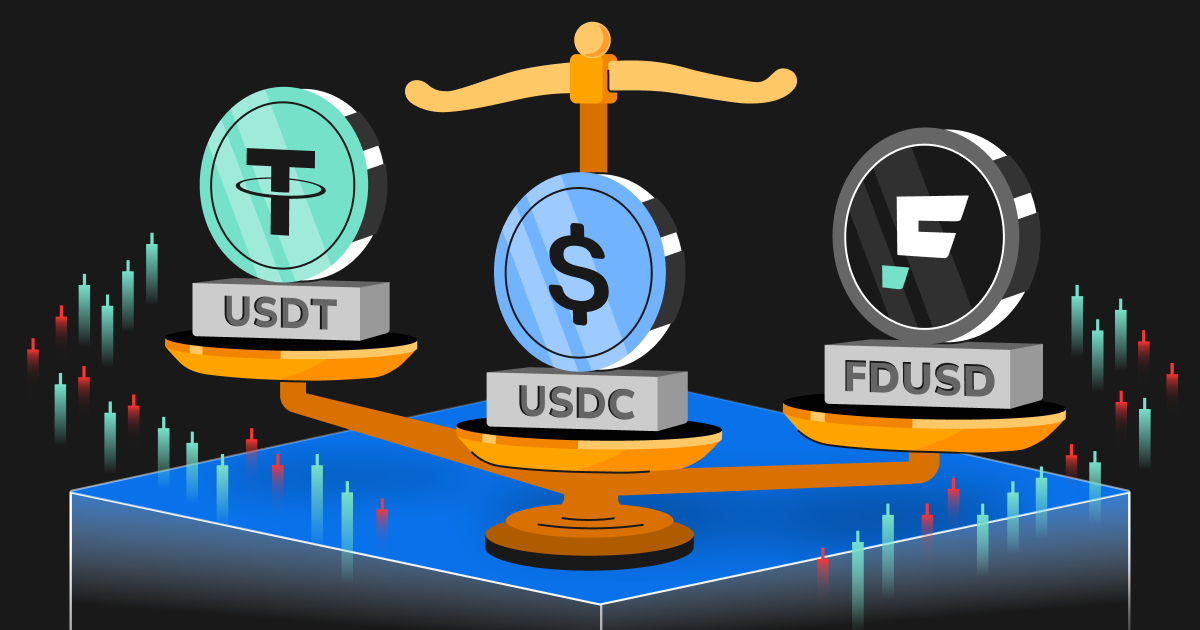
- Price Stability: Unlike Bitcoin or Ethereum, prices can fluctuate dramatically over a short period of time, and stablecoins maintain a fixed ratio to the anchored asset through various mechanisms. For example, USDT and USDC are designed to maintain a 1:1 value relationship with the US dollar.
- Blockchain Proprimacy: Stablecoin inherits all the advantages of blockchain technology. Transfers can be made seven days a week, 24 hours a day, without bank hours restrictions; cross-border transfers are usually completed within minutes, rather than within a few business days of a traditional bank.
- Programmable Properties: Integrate Stable Currency with Smart Contracts to achieve automation capabilities that are hard to achieve with traditional currencies. For example, businesses can set up smart contracts that automatically pay stablecoins to suppliers when certain conditions are triggered.
Top 3 Financial Pain Points Solved by Stabilizer
1. Reduce Cryptocurrency High Volatility
Dramatic price fluctuations of major cryptocurrencies such as Bitcoin and Ethereum are common. Stablecoin offers a price-stable alternative that allows cryptocurrency users to keep assets of stable value without leaving the blockchain ecosystem.
2. Improve Cross-Border Payment Efficiency
Traditional cross-border remittances typically take 3-5 business days and may incur a 3-5% handling fee per remittance. Stable currencies can complete cross-border transfers in minutes, usually less than $1, and are not affected by bank business hours or national holidays.
3. Providing Decentralized Financial Basis
Decentralized financial agreements require assets of stable value as a basis. In the loan agreement, the borrower needs to provide collateral, and the interest the lender wants to receive is stable. Stabilization plays a key role in enabling decentralized finance to provide a service experience close to traditional finance.
The four main types and mechanisms of operation of stablecoins
French mortgage-backed stablecoins
Such stablecoins are reserved for fiat currency of equivalent denomination by the issuer, and the user deposits one dollar and the issuer mints a stablecoin; when the user wishes to exchange it back into the franc, the issuer destroys the stablecoin and returns the dollar.
Representative currencies:USDT、USDC
pros: The mechanism is simple to understand, the price stability is usually higher
risks: Depends on trust in issuers, pay attention to reserve transparency
Cryptocurrency collateralized stablecoins
Automatically manage collateral and settlement processes with smart contracts using other cryptocurrencies as collateral. Since cryptocurrency prices fluctuate, the agreement requires excess collateral.
Representative currencies:DAI
pros: COMPLETELY DECENTRALIZED, NOT DEPENDENT ON CENTRALIZED INSTITUTIONS
risks: Collateral Price Volatility and Smart Contract Vulnerability Risk
Algorithmic stablecoin
Do not rely on any collateralized assets, but maintain price stability through an algorithm that automatically adjusts the supply. When the stablecoin price is above $1, the agreement increases the supply pressure lowers the price; when the price is below $1, the agreement reduces the supply pushing up the price.
Risk Tips: Several algorithmic stablecoins have failed in history, such as TerraUSD (UST) that crashed in 2022, investors need to evaluate such stablecoins with particular caution.
Commodity Collateralized Stable Coins
Use gold, oil or other physical commodities as reserve support. For example, PAX Gold (PAXG) is backed by solid gold, and each PAXG represents one ounce of London standard gold.
typified: Provides digital ownership of physical assets, allowing investors to easily buy and sell and transfer commodities such as gold.
Detailed comparison of major stablecoins: USDT, USDC, DAI, USAT
USDT (Tether): The largest stablecoin on the market
Issued by Tether, USDT is the world's first large-scale stablecoin with a current market capitalization of more than $1,400 billion, accounting for about six components of the stablecoin market.
superiority: Wide acceptance and deep liquidity
considerations: Reserve transparency has been controversial and investors are advised to pay attention to their quarterly reserve reports
USDC (USD Coin): The most compliant stablecoin
USDC is issued by US company Circle in partnership with Coinbase, is regulated by the New York State Financial Services Authority and provides monthly independent audit reports.
superiority: Higher regulatory compliance and reserve transparency
Risk Events: USDC BRIEFLY UNHOOKED DURING SILICON VALLEY BANK SHUTDOWN IN MARCH 2023
DAI: The most decentralized stablecoin
DAI is issued by MakerDAO protocol and is managed entirely by smart contracts and does not depend on any centralized company to hold reserves.
superiority: True Decentralization and Anti-Censorship
characteristic: With an excess collateral mechanism, it is usually necessary to deposit $150 worth of Ether to lend a $100 DAI
USAT (USA): The First Federally Regulated Tether Stable Coin
USAT is Tether's brand new USD stablecoin launched in January 2026, designed for the US market and fully compliant with the US GENIUS Act regulatory framework.
Core Features:
- Issued by Anchorage Digital Bank, a federally chartered bank in the United States
- Reserve hosted by Wall Street Tier 1 trader Cantor Fitzgerald
- Provides monthly audit reports, greater transparency than USDT
- Target Users for US Institutional Investors and Compliance Driven Businesses
Differences from USDT: USDT serves global markets and adopts offshore architecture; USAT is federally regulated within the United States.
Both form Tether's “dual track strategy,” with USDT maintaining a global liquidity advantage and USAT providing institutional-level compliance protection.
Suitable for:
- Investors in institutions that value regulatory compliance
- Business Users Required to Compliant U.S. Regulations
- CONSERVATIVE INVESTORS SEEKING HIGH TRANSPARENCY
Five Practical Application Scenarios for Stable Coins
1. Cryptocurrency Trading Hedge Tools
Cryptocurrency traders convert assets such as Bitcoin or Ethereum to stablecoins when they expect market declines to avoid loss of value; buy other cryptocurrencies quickly with stablecoins when the market presents a buying opportunity.
2. Cross-border remittances and international payments
For Taiwanese households that rely on overseas remittances, stablecoin significantly reduces remittance costs. According to Central Bank statistics, Taiwan has a large amount of cross-border remittances per year, and stablecoins offer a more efficient alternative.
3. Decentralized financial infrastructure
Loan agreements such as Aave and Compound allow users to deposit stablecoins to earn interest. Interest rates are determined automatically by market demand and may be higher than traditional bank deposit rates, but come with smart contract risks.
4th. Corporate Capital Management
Businesses in Taiwan are starting to hold some of their working capital in stablecoins to enjoy the flexibility and efficiency of blockchain accounts. Businesses can set up multi-signature wallets to create strict internal controls.
5. Value Storage Options
For investors who are concerned about asset allocation, stablecoins provide a way to digitize USD exposure, especially as a staging ground for short-term capital, especially when the Taiwan dollar is volatile.
Risks and precautions for investing in stablecoins
Reserve Management Risks
The core risk of bank-backed stablecoins lies in whether the issuer actually holds sufficient reserves. Investors should pay attention to the issuer's audit reports and reserve asset quality.
Risk of uncoupling
In extreme market conditions, stablecoins may temporarily lose their hook with the anchored asset. For example, in 2023, USDC briefly fell to $0.88 due to the Silicon Valley bank closure event.
Regulatory Risks
Regulatory policies for stablecoins in various countries are still evolving. The HKMA has incorporated virtual assets into the regulatory framework and investors need to pay attention to the relevant regulatory changes.
Technical Risks
Technical issues, including smart contract vulnerabilities, blockchain network congestion, may affect the transfer and use of stablecoins.
How to choose the right stablecoin?
Assess personal needs
- Transaction Purposes: Prioritize USDT with the highest liquidity
- Long term holding: Selectable USDC with higher transparency
- Decentralization concept: Suitable for DAI
- Organizational compliance requirements: Suitable for USAT or USDC (regulated in the US, high transparency)
Check Issuer Transparency
Check whether the stablecoin issuer regularly publishes audit reports on whether the reserve asset composition is safe and reliable.
Understanding the Redemption Mechanism
Verify the redemption process, cost, and timing of stablecoins to ensure smooth conversion back to French currency when needed.
Distributed Holding Risk
You should not concentrate all your funds in a single stablecoin. Consider diversifying holdings of different types of stablecoins to reduce risk.
Summary: The Role and Prospects of Stable Coins in Digital Finance
What is a stablecoin? It is not only a trading medium for the cryptocurrency market, but also a bridge connecting traditional finance and digital assets. For Taiwanese investors, Stabilization provides a relatively stable option to participate in the cryptocurrency ecosystem, while also bringing innovative application possibilities such as cross-border payments, decentralized finance.
However, investors must understand that stablecoins are not risk-free. From reserve transparency to regulatory changes, from technical vulnerabilities to market extremes, all need to be carefully evaluated and managed. Taiwan investors are advised to have a thorough understanding of its operating mechanisms before using stablecoins, choose reputable issuers and allocate assets appropriately based on their risk tolerance.
As fintech development and regulatory frameworks are gradually perfected, stablecoins are expected to play a more important role in Taiwan's digital financial ecosystem, but investors should always remain rational, avoid excessive concentration of risk, and remain attentive to market and regulatory dynamics.
Empower Your Business with Stablecoins
Whether you are a CFO seeking to optimize cross-border payment processes, a financial institution looking to expand digital asset services, or an international enterprise planning to enter the U.S. market, USAT can enhance efficiency and reduce costs for your operations. We sincerely invite you to explore how stablecoins can be integrated into your business workflows and discover the potential applications of regulated digital dollars in your industry.
Fill out the Corporate Inquiry Form today. Our professional team will provide a customized assessment of stablecoin applications to help you seize opportunities, mitigate risks, and create value in the wave of digital financial transformation. The future of stablecoins is here—are you ready?
Fill Out Inquiry Form
Risk Warning Statement:
Trading virtual assets is risky and investors should evaluate with caution. While stablecoins are designed to maintain stable value, they can still cause price volatility or loss due to issuer issues, market extremes, or regulatory changes. This article is for educational reference only and does not constitute any investment advice. Before investing, be sure to research yourself, understand the risks involved, and invest only money that you can afford to lose. HKMA warns: “Virtual assets are non-currency, with high risk transactions, and investors should be cautious.”