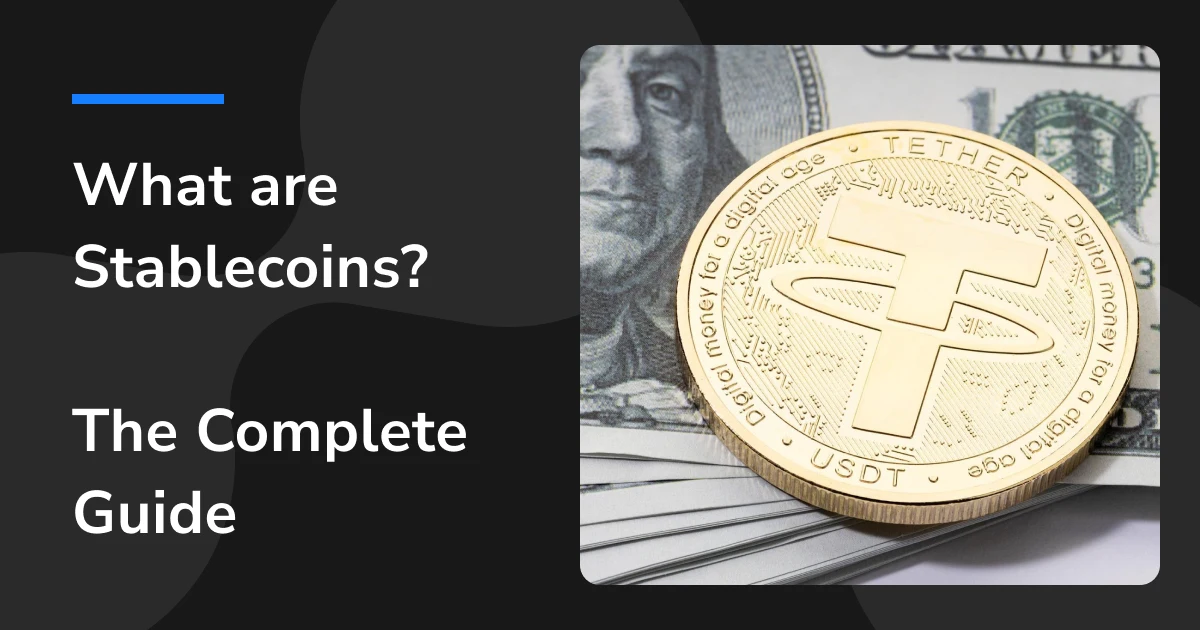
What are the stablecoins? Full Inventory and Selection Guide for Mainstream Stable Coins 2026
What are the types of stablecoins? Description of the four categories
Before understanding what specific stablecoins are, first master the classification of stablecoins. Depending on the value support mechanism, stablecoins are mainly divided into four main types.
French mortgage-backed stablecoins
Issuers hold equivalent fiat currencies as reserves, holding the corresponding fiat currency or equivalent assets for each issue of stablecoin. This is the current market mainstream, accounting for more than 90% of the total market capitalization of stablecoins.
Representative currencies:USDT, USDC, USAT, BUSD (DISCONTINUED)superiority: Simple mechanism, high price stability, easy to understandrisks: Reliance on issuer credit, reserve transparency
Cryptocurrency collateralized stablecoins
Automated management via smart contracts using other cryptocurrencies as collateral. Because cryptocurrency prices fluctuate, overcollateralization is often required.
Representative currencies:DAI、SUSD、LUSDsuperiority: Decentralized, high transparency, independent of centralized institutionsrisks: Collateral Price Volatility, Smart Contract Vulnerability Risk
Algorithmic stablecoin
Automatically adjust supply to keep prices stable with algorithmic adjustment without collateral support.
Representative currencies:FRAX (Partial Algorithm)risks: Extremely high risk, multiple algorithmic stablecoins have crashed (such as UST)
Commodity collateralized stablecoins
Value support is supported by physical commodities such as gold, oil, etc.
Representative currencies:PAXG, XAUT (gold stablecoin)characteristic: Provide digitization of physical assets, but the price fluctuates with the commodity
What are the French currency backed stablecoins?
French backed currency is the most mainstream stablecoin type at the moment, and the following are the major currencies listed below.
USDT (Tether) - Max Market Cap
Basic information:
- Publisher: Tether Limited
- CURRENT MARKET CAPITALIZATION: APPROX. $1,400 BILLION
- Anchored Assets: USD (1:1)
- Publication year: 2014
Core Features:
- The world's largest stablecoin with a market share of approximately six components
- Supports more than ten blockchains such as Ethereum, Tron, Solana
- Best liquidity, listed on more than 500 exchanges
- Tron version fees are extremely low and widely used in Asian markets
considerations:
- Registered in BVI, Offshore Structure
- Provides only quarterly proof of reserve, relatively low transparency
- Faced regulatory scrutiny but retains market dominance
Suitable for the target: Users who need optimal liquidity and frequent transactions
USDC (USD Coin) - Highest Compliance
Basic information:
- Issuer: Circle and Coinbase
- Current Market Capitalization: Approx. $400 billion
- Anchored Assets: USD (1:1)
- Publication year: 2018 year
Core Features:
- Regulated by the New York State Financial Services Authority
- Publication of independent audit reports every month for maximum transparency
- Reserves are mainly cash and short-term U.S. Treasury securities
- Get support from many traditional financial institutions
Risk Events:
- USDC briefly unhooked to $0.88 when Silicon Valley Bank closed in March 2023
- Events show banking system risks even with highly compliant stablecoins
Suitable for the target:Institutional investors who value compliance and transparency
USAT (USA) - the first federally regulated Tether stablecoin
Basic information:
- Publisher: Anchorage Digital Bank
- Current market capitalization: Emerging stablecoins
- Anchored Assets: USD (1:1)
- Publication year: 2026
Core Features:
- Federal regulatory framework: ISSUED BY THE FIRST FEDERALLY LICENSED CRYPTO ASSET BANK IN THE UNITED STATES, FULLY COMPLIANT WITH THE GENIUS ACT
- Wall Street Hosting: The reserve is hosted by Cantor Fitzgerald, holding only USD cash and short-term Treasury bills
- High Transparency: Provide monthly audit reports issued by the Registered Accountants Office
- Dual Track Strategy: Complementary to USDT, USDT services worldwide, USAT specializes in the US market
Differences with USDT:USDT provides offshore architecture services to the global market, and USAT operates under US federal regulation. USAT TARGET USERS PROVIDE HIGHER REGULATORY PROTECTION THAN USDT FOR US INSTITUTIONAL INVESTORS, LISTED COMPANIES, AND BUSINESSES IN NEED OF STRICT COMPLIANCE.
Suitable for the target: Institutional investors who value federal regulation and pursue the highest standards of compliance
BUSD (Binance USD) - Issuance Discontinued
Basic information:
- Issuer: Binance and Paxos
- MARKET CAPITALIZATION: CONTINUING TO SHRINK
- Status: New tokens will cease to be issued from February 2023
Important Information: US regulators asked Paxos to stop issuing BUSD, causing market capitalization to shrink from as high as $230 billion. This case reminds investors that even stablecoins backed by large exchanges can be affected by regulatory policy changes.
PYUSD (PayPal USD) - Traditional Payments Giant Enters
Basic information:
- Issuer: PayPal and Paxos
- CURRENT MARKET CAPITALIZATION: APPROX. $7 MILLION
- Publication year: 2023
Core Features:
- Integrate directly into PayPal and Venmo apps
- Lower end user usage thresholds
- Regulated by the New York State Financial Services Authority
Market Performance: While PayPal has a large user base, PYUSD's market capitalization growth is slow, indicating that traditional users still have limited demand for stablecoins.
TUSD (TrueUSD) - Legacy Independent Stabilizer
Basic information:
- CURRENT MARKET CAPITALIZATION: APPROX. $5 MILLION
- Features:Emphasizing Independent Third-Party Hosting
Market Position: Once one of the mainstream stablecoins, the market share has gradually shrunk as USDT and USDC expand in size, now mainly as the preferred stablecoin for some exchanges.
What are the cryptocurrency mortgage-backed stablecoins?
These stablecoins use cryptocurrencies as collateral and offer decentralized stablecoin options through automated management of smart contracts.
DAI - Largest Decentralized Stable Coin
Basic information:
- Release Agreement: MakerDAO
- CURRENT MARKET CAPITALIZATION: APPROX. $50 BILLION
- Anchored Assets: USD (1:1)
- Publication year: 2017
Core Features:
- Fully Decentralized: Managed by smart contracts, not dependent on centralized companies
- Excess Collateral Mechanism: For example, deposit $150 worth of Ethereum to borrow $100 DAI
- Transparent on the chain: All collateral locked in a public smart contract, anyone can inquire instantly
- Anti-Censorship: No single entity can freeze accounts or change protocol rules
Operation Mechanism: Users deposit Ethereum or other accepted cryptocurrencies into MakerDAO smart contracts as collateral. When the value of the collateral falls close to the liquidation line, Smart Contracts automatically sell the collateral, ensuring that DAI is always adequately supported.
Suitable for the target: Adhering to the concept of decentralization, users primarily active in the DeFi ecosystem
sUSD (Synthetix USD) - Synthetic Asset Stabilizer
Basic information:
- Release agreement: Synthetix
- CURRENT MARKET CAPITALIZATION: APPROX. $1 MILLION
Core Features: Generated by excess collateral of SNX tokens, used primarily within the Synthetix ecosystem, suitable for advanced DeFi users.
LUSD (Liquity USD) - Low handling fee decentralized stablecoin
Basic information:
- Release agreement: Liquity
- CURRENT MARKET CAPITALIZATION: APPROX. $1 MILLION
Core Features: Accepts only Ethereum as collateral, the protocol design is concise, emphasizing low handling fees and high capital efficiency.
What are the algorithmic stablecoins?
Algorithmic stablecoins do not rely on collateral and maintain prices through algorithmic supply adjustments. The risk of this type of stablecoin is extremely high, and several projects have crashed.
FRAX - Partial Algorithm Stabilizer
Basic information:
- CURRENT MARKET CAPITALIZATION: APPROX. $6 MILLION
- Mechanism: Mixed Mode (Partial Collateral+Partial Algorithm)
Core Features: Dynamically adjust mortgage rates according to market demand. Lower the mortgage rate when market confidence is high, increase the mortgage rate when confidence is low, and it is more stable than pure algorithmic stablecoins.
Cracked Algorithm Stabilizer Alert
TerraUSD (USD):
- Crash in May 2022, with market capitalization from $400 billion to zero
- Causing significant losses for millions of investors
- Highlighting the extreme risks of pure algorithmic stablecoins
Investment warning: Algorithmic stablecoins are highly dependent on market confidence, and once panic sell-offs occur, the stability mechanism may malfunction leading to a death spiral. Investors should evaluate such stablecoins with extreme caution.
What are commodity backed stablecoins?
These stablecoins provide digital ownership of commodities, primarily gold, as a value support.
PAXG (Pax Gold) - Gold stablecoin
Basic information:
- Publisher: Paxos
- Anchored Assets: Gold (1 oz London Standard Gold)
- CURRENT MARKET CAPITALIZATION: APPROX. $5 MILLION
Core Features: Each PAXG represents one ounce of solid gold stored in a professional vault. Holders can choose to exchange physical gold or trade tokens in the secondary market.
Suitable for the target: Investors who want to hold gold hedges but don't want to deal with physical storage and transportation.
XAUT (Tether Gold) - Tether's gold stablecoin
Basic information:
- Publisher: Tether
- Anchored Assets: Gold (One Ounce)
- CURRENT MARKET CAPITALIZATION: APPROX. $6 MILLION
specialties: Similar to PAXG, a gold-backed token issued by Tether.
considerations: Strictly speaking, the price of such tokens fluctuates with the price of gold and is not truly “stable”, but rather like commodity tokenization products.
Mainstream stablecoin market capitalization and market share
After understanding what stablecoins are, here are the market capitalization rankings and market share for January 2026:
TOP FIVE IN MARKET CAPITALIZATION
- USDT: Approximately US$1,400 billion (approximately 60% of the market share)
- USDC: About $400 billion (city share about 17%)
- DAI: Approximately US$50 billion (market share approx. 2%)
- FDUSD: Approx. $30 billion
- PYUSD: Approx. $7 million
Market centralization analysis
USDT and USDC together account for more than 7.7 stablecoin market capitalizations, indicating that the market is highly concentrated in these two major franc-backed stablecoins. Decentralized stablecoin DAI, despite its relatively small market capitalization, occupies an important place in the DeFi ecosystem.
Emerging stablecoin observation
USAT as an emerging stablecoin launched in 2026, although still small in market capitalization, is worth keeping an eye on its evolution due to its federal regulatory background and the support of the Tether brand. If successful in attracting US institutional funding, it could grow rapidly.
How do Taiwanese investors choose stablecoins?
Faced with so many stablecoin options, how should Taiwanese investors choose? A practical strategy is provided below.
Choose according to the scenario you are using
Frequent Trading Needs:
- Preferred: USDT (Best Liquidity, Most Trading Pairs)
- Second Choice: USDC (Mainstream Exchanges Supported)
Long-term holding requirements:
- Preferred: USDC (High Transparency, Strong Compliance)
- Second Choice: USAT (Federally Regulated, Institution-Level Protection)
DeFi Application Requirements:
- Preferred: DAI (Decentralized, DeFi Eco-Integration Best)
- Second choice: USDC (supported by most DeFi protocols)
Organizational Compliance Requirements:
- Preferred: USAT (Federally Regulated, Highest Compliance Standards)
- Second Choice: USDC (state-level regulation, high transparency)
Choose according to risk tolerance
CONSERVATIVE INVESTORS:
- Prioritize regulated and transparent stablecoins (USDC, USAT)
- Avoiding Algorithmic Stable Coins
- Distributed holdings of two to three major stablecoins
Balanced Investors:
- Main configuration USDT or USDC (approx. 70%)
- Partial configuration DAI (approx. 20%)
- Reserve a small amount to try emerging stablecoins (approx. 10%)
Active Investors:
- Flexible configuration according to your liquidity needs
- Willing to try emerging stablecoins
- But still avoid high-risk algorithm stablecoins
Key metrics for evaluating stablecoins
Reserve Transparency:
- Advantage: Monthly Audit Report (USDC, USAT)
- Medium: Quarterly Proof Report (USDT)
- Defects: No regular reporting or information opacity
Regulatory Compliance:
- Advantage: Federally Regulated (USAT)
- Medium: State-level Regulation (USDC)
- Difference: Offshore Operation (USDT)
Market Liquidity:
- Advantage: USDT (the most widely supported exchange)
- Medium: USDC, DAI
- Difference: Small stablecoin
Technical security:
- Decentralized stablecoins: Pay attention to smart contract auditing
- Centralized stablecoins: Beware of Issuer Credit
Distributed Risk Strategies
Recommended for Taiwanese investors to adopt a “primary allocation” strategy:
Main configuration (70-80%): Select one to two major stablecoins as primary holder, such as USDT or USDC
Secondary configuration (15-25%): Configure decentralized stablecoin DAI or highly compliant USAT
Retention of elasticity (5-10%): Save a small amount of money to try emerging stablecoins or special-purpose stablecoins
Avoid concentration: Don't put all funds in a single stablecoin to reduce issuer risk
※For reference only
Summary: Stable Coin Selection Recommendations
What are the stablecoins so far? From USDT with the largest market capitalization, the most compliant USDC, the decentralized DAI, to the emerging federally regulated stablecoin USAT, each stablecoin has its unique positioning and application scenarios.
Taiwan Investor Selection Suggestions:
General Investors: USDT (Liquidity Requirement) and USDC (Transparency Requirement) with a ratio of approximately 6:4
Conservative Investors: Based on USDC, and with USAT (if available) for maximum compliance protection
DeFi Users: Based on DAI, with USDC, enjoy decentralized advantages
Institutional Investors: Prioritize USAT or USDC to meet compliance and transparency requirements
Important Reminders:
- Regularly review the dynamics of stablecoin issuers held
- Focus on changes in regulatory policy
- Don't be tempted by high yield promises and choose high-risk stablecoins
- Always keep risk spread, avoiding a single stablecoin concentration
As regulatory frameworks are perfected and technology evolves, stablecoin types and application scenarios will continue to expand. Taiwanese investors should continue to learn how to adjust their configuration strategies according to market changes to find the right balance between security and convenience.
Empower Your Business with Stablecoins
Whether you are a CFO seeking to optimize cross-border payment processes, a financial institution looking to expand digital asset services, or an international enterprise planning to enter the U.S. market, USAT can enhance efficiency and reduce costs for your operations. We sincerely invite you to explore how stablecoins can be integrated into your business workflows and discover the potential applications of regulated digital dollars in your industry.
Fill out the Corporate Inquiry Form today. Our professional team will provide a customized assessment of stablecoin applications to help you seize opportunities, mitigate risks, and create value in the wave of digital financial transformation. The future of stablecoins is here—are you ready?
Fill Out Inquiry Form
Risk Warning Statement
Investing in virtual assets is highly risky and can fluctuate in price. While stablecoins are designed to maintain stable value, there may still be downside risks in extreme market conditions.
Issuer bankruptcies, poor reserve management, regulatory policy changes, smart contract vulnerabilities, or insufficient market liquidity can all result in stablecoins being unable to stay anchored or even cost money losses.
The risk of algorithmic stablecoins is particularly high, and several projects have been completely crashed in history. You should carefully assess your financial situation and risk tolerance once you are fully aware of the risks involved. Past performance does not represent future results.
The contents of this article are for reference only and do not constitute any investment advice or profit guarantee. Consult a qualified financial advisor or legal professional before making any investment decisions.