


What is the Impossible Triangle of Blockchain? A must know for beginners!
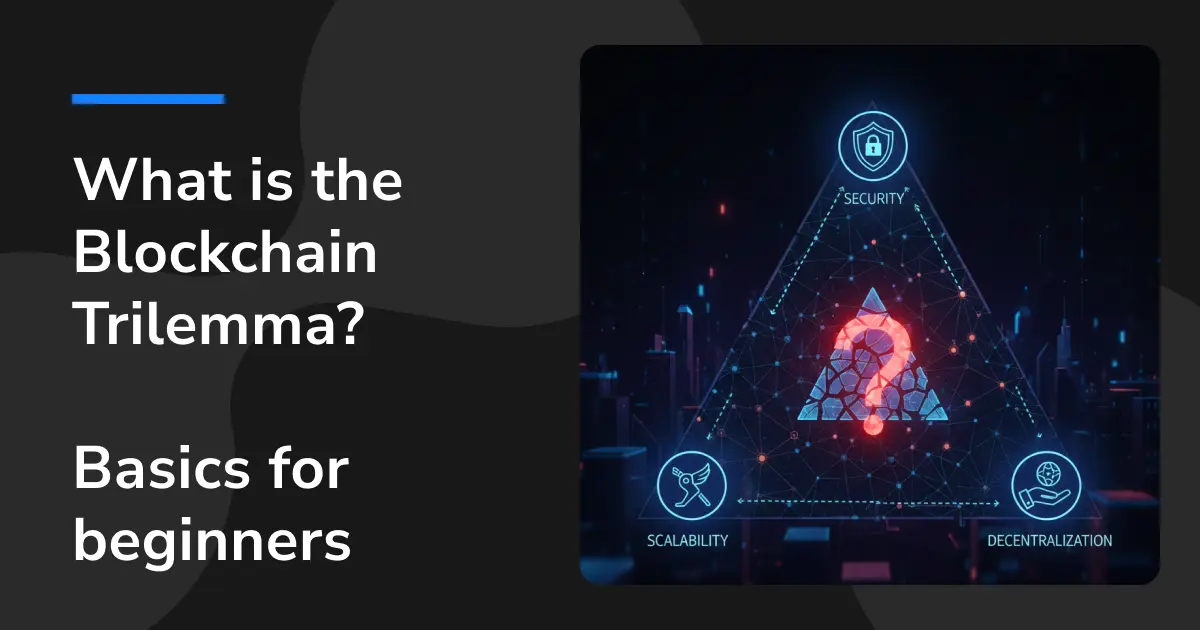
The Impossible Triangle of Blockchain
With the technological innovation of blockchain, the application scene is also becoming more diverse. From the beginning of the Bitcoin network as a trading use, to today's Etherchain smart contracts, the data transfer of the alliance chain, the blockchain has been evolving and continues to strive for higher security and scalability while maintaining decentralization. This feature, however, contradicts each other, is called the “blockchain triangle of impossibility”. No one blockchain can achieve the characteristics of three, and only two can be achieved at most. For example, the most familiar Bitcoin focuses on decentralization and security at the expense of scalability. Therefore, many developers are constantly developing new technologies to solve this problem.
Blockchain's Impossible Triangle: Decentralization
The essence of blockchain technology is that it is not controlled by a centralized entity. When Chung Motoshi published the Bitcoin White Paper, during the positive financial tsunami, many people no longer believed that centralized institutions would properly safeguard our assets. And the decentralized nature of Bitcoin gives people a different understanding of trust, with decentralized nodes making it impossible for anyone to change records or gain ownership at will. A higher number of nodes usually indicates a higher degree of decentralization. In the past, our data has been held by centralized companies such as Meta, Apple, Amazon, etc., and it is difficult for us to be sure whether these companies will disclose or overuse our personal data. Today, with blockchain technology, Web 3.0 enables us to take control of our own information, giving us true autonomy over our digital messages. High-Decentralized Blockchain Representatives: Bitcoin, Ethereum
The Impossible Triangle of Blockchain: Security
The security of blockchain technology is also one of its biggest advantages. BLOCKCHAIN TRANSACTION RECORDS ARE ENCRYPTED, WHICH PREVENTS HACKER ATTACKS AND DATA TAMPERING. However, assuming more than half of the nodes on a chain are controlled by the same entity, a problem known as a “51% attack” occurs. This entity can tamper with the absolute majority of on-chain records to compromise the assets of other users on the chain. So, the higher the number of nodes, the more difficult it is to achieve a "51% attack”, for example, Bitcoin currently has 49,337 nodes, so its security is very high. However, high security comparatively reduces its transaction speed and reduces scalability. Because every transaction needs to be verified by the miner, and the POW consensus mechanism takes the longest to verify, the volume of transactions per second (TPS, transaction per second) decreases as well. High-security blockchain representatives: Bitcoin, Litecoin (LTC)
Blockchain's Impossible Triangle: Scalability
The most intuitive measure of blockchain scalability is transaction speed, and we use the most common unit of transactions per second (TPS, transaction per second), and the higher the TPS, the faster the blockchain transaction speed. For example, the well-known blockchain Solana claims that its technology can reach 50,000 transactions per second. The most straightforward way to achieve scalability and speed up transactions is to reduce the number of authentication nodes. A higher number of nodes means that a transaction requires more validation procedures and longer transaction times. Reducing the number of nodes can make transactions run faster. However, when the number of nodes is smaller, miners involved in authentication have a better chance to gain access to transaction information and validate transactions, which in turn reduces the degree of decentralization of the blockchain. Highly Scalable Blockchain Representative: Solana
summed
Blockchain's impossible triangles have always been a puzzle for tech developers, and it's hard to get the three together and need to sacrifice one of the features to make blockchain work. But with different application scenarios, blockchain can also change differently accordingly. For example, an alliance chain based on information transfer focuses on security and scalability, and must sacrifice decentralization to achieve its goals. Blockchain technology can be adjusted to suit different needs and application scenarios for optimal performance and results. There are also many ways to try to solve the impossible triangle problem, most commonly improved through Layer 2 technology. For example, Layer 2 on an Ethernet chain improves its crippling congestion, increasing scalability and speed of transactions while maintaining decentralization and security. BITCOIN'S LIGHTNING NETWORK HAS ALSO ACCELERATED THE SPEED OF TRANSACTIONS IN THE FUTURE WITHOUT SACRIFICING DECENTRALIZATION AND SECURITY. AS BLOCKCHAIN TECHNOLOGY DEVELOPS AND IMPROVES, I BELIEVE THAT THIS IMPOSSIBLE TRIANGLE WILL BE GRADUALLY RESOLVED, AND THE SCOPE OF APPLICATIONS OF BLOCKCHAIN TECHNOLOGY WILL GROW WIDER.
Want to take the first step? Open an account with ZONE Wallet and buy stablecoins and Bitcoin with confidence in NT$!
[download-app] ZONE Wallet is a blockchain investment gateway designed for Taiwan users, complies with regulatory compliance in Taiwan x cutting-edge security technology x supports the buying and selling of new Taiwan currencies, is committed to driving the value of “every crypto transaction with peace of mind” so you can easily own your first cryptocurrency asset. Investing in virtual assets involves the risk of price volatility and liquidity. The above is for reference only and does not constitute financial advice. Assess your financial situation carefully before investing and be wary of fraud.


