Blockchain Meaning: Complete Analysis from Basic Concepts to 5 Related Applications
The term “blockchain” has appeared frequently in news reports and business discussions in recent years, but remains an abstruse technical term for most Taiwanese. What exactly is blockchain? Why is it called the most disruptive innovation after the Internet? This article will give you a complete understanding of what blockchain really means, how it works, and delves into the top 10 application areas related to Taiwan in the simplest and most straightforward way, to help you gain a complete grasp of this key technology that is reshaping the future.
First, what does blockchain mean? The simplest definition and interpretation
Blockchain Meaning Whitepaper Explanation
Blockchain (Blockchain) It can be easily understood as one”Distributed ledger technology“, like a public ledger that everyone can see, but no single person can manipulate on their own.
Imagine the financial management of the Taiwan Community Governing Council:
- The traditional way: Appoints a member as an accountant, and all expenses are recorded by him. The question is: What should I do if I make a mistake, lose my book, or intentionally create a fake? Everyone must have full confidence in the integrity and ability of this accountant.
- Blockchain method: Have each member keep an exactly the same ledger. Each time a new charge occurs, verify that the record is correct and synchronously update the accounts on your own. If someone tries to get their hands on their own account, the other person's accounts will immediately show inconsistencies and fakes will be discovered.
This is Blockchain”decentralisation“and”Collective ValidationThe core meaning of”.
The origin of the blockchain name
Why is it called “Blockchain”? Because this technology organizes the data into one”Block”, and then use encryption technology to place these blocks in chronological order”chains” Pick it up.
- Each block is like a page in the ledger, recording all transactions that occurred within a specific time period
- Each new block contains the digital fingerprint of the previous block (calledHash value), forming a chain structure that snaps into rings
- Modifying any history results in fingerprint mismatches, causing fake behavior to be exposed immediately
The Fundamental Difference Between Blockchain and Traditional Databases
The key to understanding what blockchain means is to understand how it differs from traditional databases:
Compare Project Traditional Database Blockchain
Control method Distributed architecture controlled by a single institution (e.g. banks, governments) without a single point of control
Data Storage Centrally stored on a single server replicated to thousands or even millions of computers worldwide
The foundation of trust Trusted Administrators Trust Mathematical Algorithms and Cryptography Principles
Modify Permissions Administrators can modify required batch authentication, almost impossible to tamper
Second, how blockchain works: understand it at once with life parables
Step 1: Trade Initiation and Broadcast
When a person wants to make a transaction (such as a transfer, record data), he uses his own”Private Key” Digitally sign the contents of the transaction. A private key is like your personal signature, only you can make it, and no one else can forge it.
The signed transaction is sent to the blockchain network, just like putting a letter into a mailbox, and the mail is delivered to all participating postal mail (network nodes). This process is called”broadcasts”, make sure that every computer in the network receives this transaction information.
Step 2: Transaction Verification and Packaging
Computers in the network (known asnodes) Upon receipt of the transaction, verification will be carried out:
- Check if the digital signature is valid
- Does the sender have enough balance
- Whether the transaction format is correct
Transactions that have been verified are entered”Trading Pool”, waiting to be packed.
Step 3: Consensus Reaching and Block Confirmation
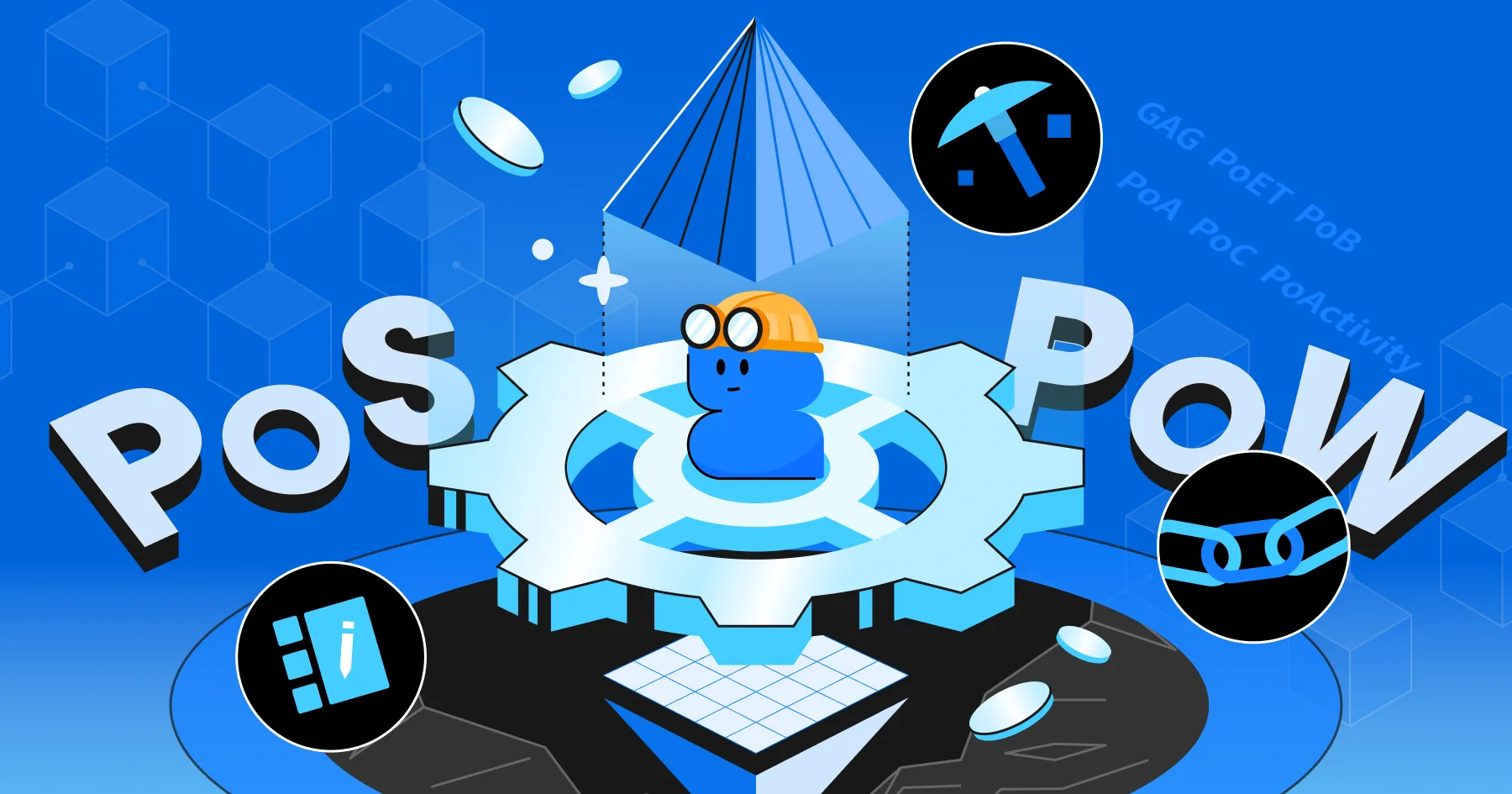
This is the most crucial part of blockchain. To be added to the blockchain, a new block must be approved by the majority of participants in the network. Different blockchains adopt different consensus mechanisms:
Step 4: Add the block to the chain
When a new block is validated by consensus, it is permanently added to the blockchain. Each new block contains the digital fingerprint of the previous block, forming an unbreakable chain. All nodes in the network synchronously update their own copy of the blockchain, ensuring that everyone's accounts are fully consistent.
Third, why is blockchain important? What problems have been solved?
1. Eliminate dependence on intermediaries
Traditional business activities are highly dependent on intermediaries: bank transfers, attorneys' testimonial contracts, accountants' audit accounts, notary certification documents. These intermediaries provide trusted services, but also charge high fees, causing delays.
Blockchain means to useTechnical replacement of trust intermediaries。 With cryptography, distributed consensus and smart contracts, blockchain creates a trusted trading environment without intermediaries. Two people who do not know each other can trade directly and do not need a bank as an intermediary.
2. Enhance data security and prevent tampering
Data breaches and tampering are a major risk in the digital age. Hackers break into corporate databases to steal customer data, prevent employees from altering financial records, and these incidents are rampant.
Blockchain's decentralized architecture greatly enhances security. Data is copied to thousands of nodes around the world, and hackers need to hack through half the nodes simultaneously to tamper with the records, which is practically impossible to achieve.
3. Create a transparent and traceable system
Many industries face a crisis of trust: unknown sources of food, unrecognisable medicines, opaque supply chains. Consumers want to know where goods come from and how they are produced, but existing systems cannot provide reliable information.
Blockchain builds end-to-end traceability. From raw material sourcing, manufacturing, logistics to retail sales, the information in each cycle is recorded up and down the chain, and consumers can scan the QR Code for a complete resume.
Fourth, the core characteristics and technical advantages of blockchain
Core Properties Description
decentralisation No single organization, corporation, or government can control the entire network, and power is distributed to all participants
Immutable Once data is written to the blockchain and verified multiple times, it is almost impossible to modify or delete
transparency All transaction records are externally transparent, and anyone can check balances and transaction history for a specific address
Programmable Smart contracts can automatically perform scheduled operations when certain conditions are met
traceability Blockchain saves every record from the Genesis block to the present, providing full historical traceability
5. Blockchain Application Area 1: Finance and Payments
Cross-border remittances and instant payments
Traditional cross-border transfers via multiple intermediary banks are costly and slow to arrive. It may take three to five business days to send money from Taiwan to Southeast Asian countries, with a margin loss of five to ten percent.
Blockchain Applications: Cross-border payments are almost “done in real time”, with significantly reduced processing fees. The HKMA has approved several banks to pilot blockchain cross-border payments, in particular remittance services between the country and the New South.
Securities Issuance and Transaction Settlement
Traditional securities issuance requires investment banking underwriting, lawyers providing legal advice, accountants auditing financial statements. The process is complex and costly. Small and medium-sized enterprises can hardly afford these costs and financing channels are limited.
Trade Financing and Credit
International trade involves complex document processes, including bills of credit, bills of lading, commercial invoices, insurance statements, and more. These files are easily error-prone and slow to process.
VI. BLOCKCHAIN APPLICATION FIELD 2: SUPPLY CHAIN AND LOGISTICS
Food Safety and Traceability
Food safety incidents are frequent, and consumers want to know where food comes from and how it is produced. Blockchain records a complete resume from farm to table, and anyone can scan the QR Code on the packaging to inquire about the product.
Drug counterfeiting and circulation tracking
The issue of counterfeit drugs has a serious impact on drug safety, especially in today's growing popularity in cross-border e-commerce. Blockchain records the complete process of drugs from production to patient hands, preventing counterfeit drugs from entering the legal supply chain.
7. Blockchain Application Field 3: Medical and Health
Electronic Medical Record Sharing and Management
Patients' medical records are scattered across different medical institutions, making it difficult for doctors to obtain a complete medical history. Blockchain creates individually-controlled health data accounts where patients decide which doctors can access and what data.
Medical Data Research Applications
Medical research requires large amounts of data, but data sharing is restricted by data protection regulations. Blockchain enables “data availability and invisibility”, and researchers can use the data for analysis, but cannot obtain the original personal data.
8. Blockchain Application Area 4: Government and Public Services
Digital Identity Verification System
Government services require authentication, but personal data protection is paramount. Blockchain creates a decentralized digital identity, allowing users to control personal information sharing.
Improved transparency of the voting system
Election fairness and transparency are the cornerstones of democracy. Blockchain voting systems ensure that every ballot is verifiable and not tampered with.
Permanent Retention of Public Records
Important records such as government documents, land registration, certificates of education need to be kept for a long time and prevented from being tampered with. Blockchain's immutability is suitable for this type of application.
9. Blockchain Application Field 5: Intellectual Property and Content Industry
Digital Creative Copyright Protection
Digital content is easily copied and pirated, and creators find it difficult to prove originality and ownership. Blockchain creates timestamps and ownership records for each work.
Patent and Trademark Management
THE TRADITIONAL PATENT APPLICATION PROCESS IS TIME-CONSUMING AND LIABLE TO BE CONTROVERSIAL. Blockchain records the creation process and time point as proof of priority.
10. Challenges and Future Trends of Blockchain
Technical Challenges and Limitations
Challenge Description
Scalability issues Speed of public chain transaction processing remains limited, and large-scale applications require technological breakthroughs
Energy Consumption Workload proof mechanism consumes a lot of electricity, environmental issues are focused on
Regulatory uncertainty As countries continue to develop their blockchain regulatory policies, Taiwan is also gradually establishing relevant frameworks
Development Opportunities in Taiwan
Opportunity Oriented Description
Opportunities for Industry Transformation Taiwan has a deep foundation in semiconductors, information technology, and more. Combining blockchain technology to create new value
Regulatory Environment Construction The Government of Taiwan is actively researching regulations on virtual asset management to establish a clear framework for the development of the industry
Talent Development Needs With a shortage of blockchain technology talent, Taiwan universities have started to develop related courses to cultivate talent
11. Summing up: Blockchain's impact on Taiwan society
What does blockchain mean? It is not only a technological innovation, butRebuilding the Infrastructure for Trust and Collaboration。
For Taiwan, blockchain technology presents multiple opportunities and challenges:
- Industry Upgrade Transformation: Traditional industries increase transparency and efficiency through blockchain technology and strengthen international competitiveness
- Innovation in Financial Services: Develop innovative blockchain finance applications under a compliance framework, serving the physical economy
- Governance Optimization: Building public trust by leveraging blockchain to improve transparency and efficiency in public services
- Rebuilding Social Trust: Blockchain provides a verifiable information base in an age of fake news
However, Taiwan also needs to carefully assess risks when developing blockchain technology, including technical security, regulatory compliance, consumer protection, and more. Recommendations for adoption”PRUDENT OPTIMISM AND PRAGMATIC PROMOTION” attitude, starting with pilot projects, gradually expanding the range of applications after gaining experience.
Blockchain is expected to play an important role in the digital transformation process in Taiwan as technology continues to develop and deepen applications. The key to success is to combine Taiwan's industry strengths to solve practical problems and strike a balance between innovation and risk management to create a blockchain application ecosystem that truly meets Taiwan's needs.
Risk Warning Statement: Blockchain technology and related applications are still in development, and investing in or adopting related technologies should be carefully assessed for risk. This article is for educational purposes only and does not constitute any investment advice or guarantee of technical adoption. Consult a professional when applying it in practice and comply with the relevant regulations of Taiwan. Any emerging technology has uncertainties and potential risks and should be made prudently based on its circumstances.